
UHR Decoder Lite
The standalone decoder for lower-powered PCs.
Version 1.3.10 test build for Windows 10 or 11. Free to use.
What it does
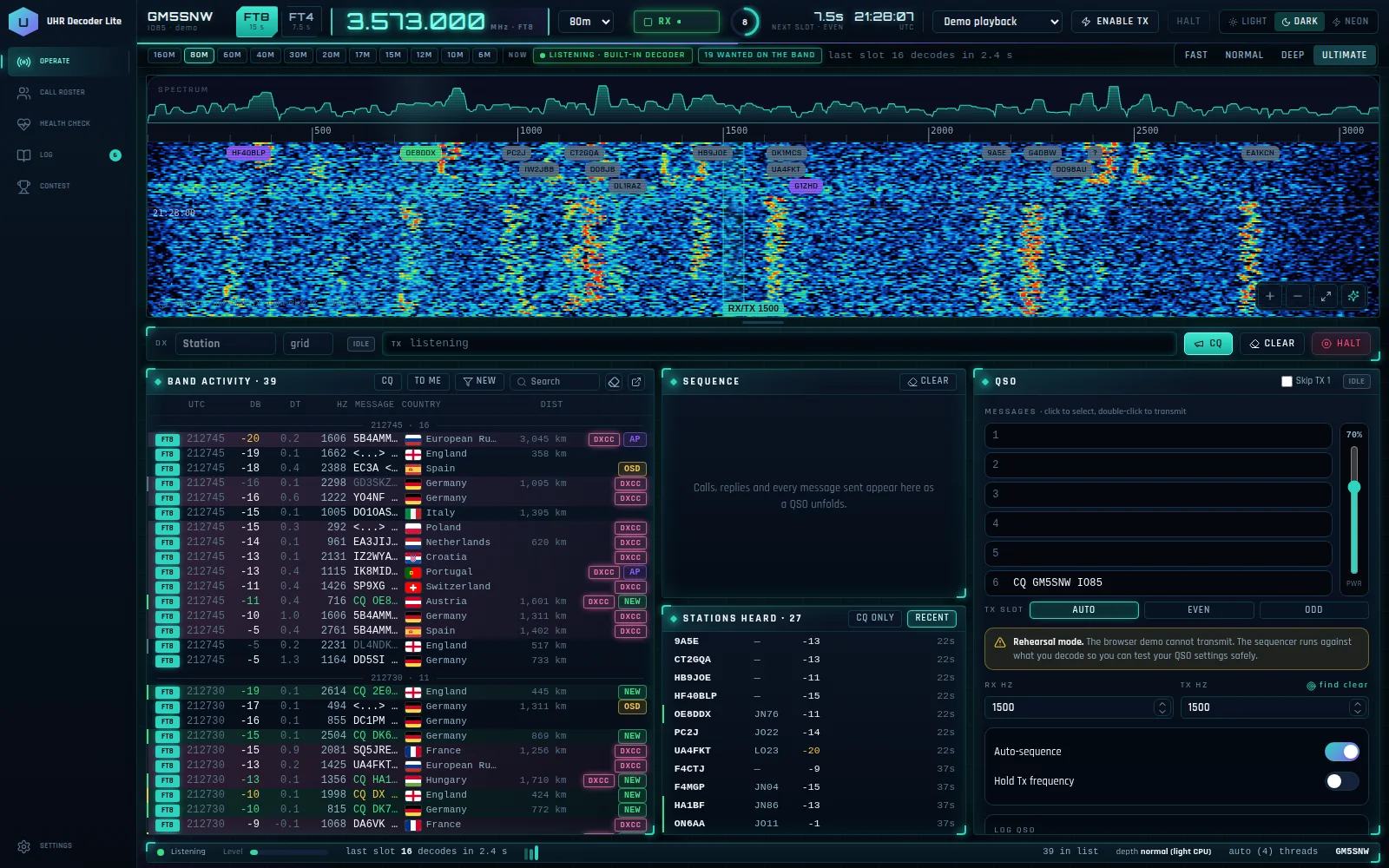
UHR Decoder Lite is the standalone decoder from the Ultimate suite. It keeps the waterfall, band activity, sequence, QSO panel, call roster, health check, log and contest mode, and leaves out the maps, spots, propagation and awards tools, so it suits older and busier PCs, or anyone who logs in other software.
Everything you need to operate
The waterfall, Band Activity, Sequence, Stations Heard and QSO panel share one window, with the same four decode depths as the full suite, from Fast to Ultimate.
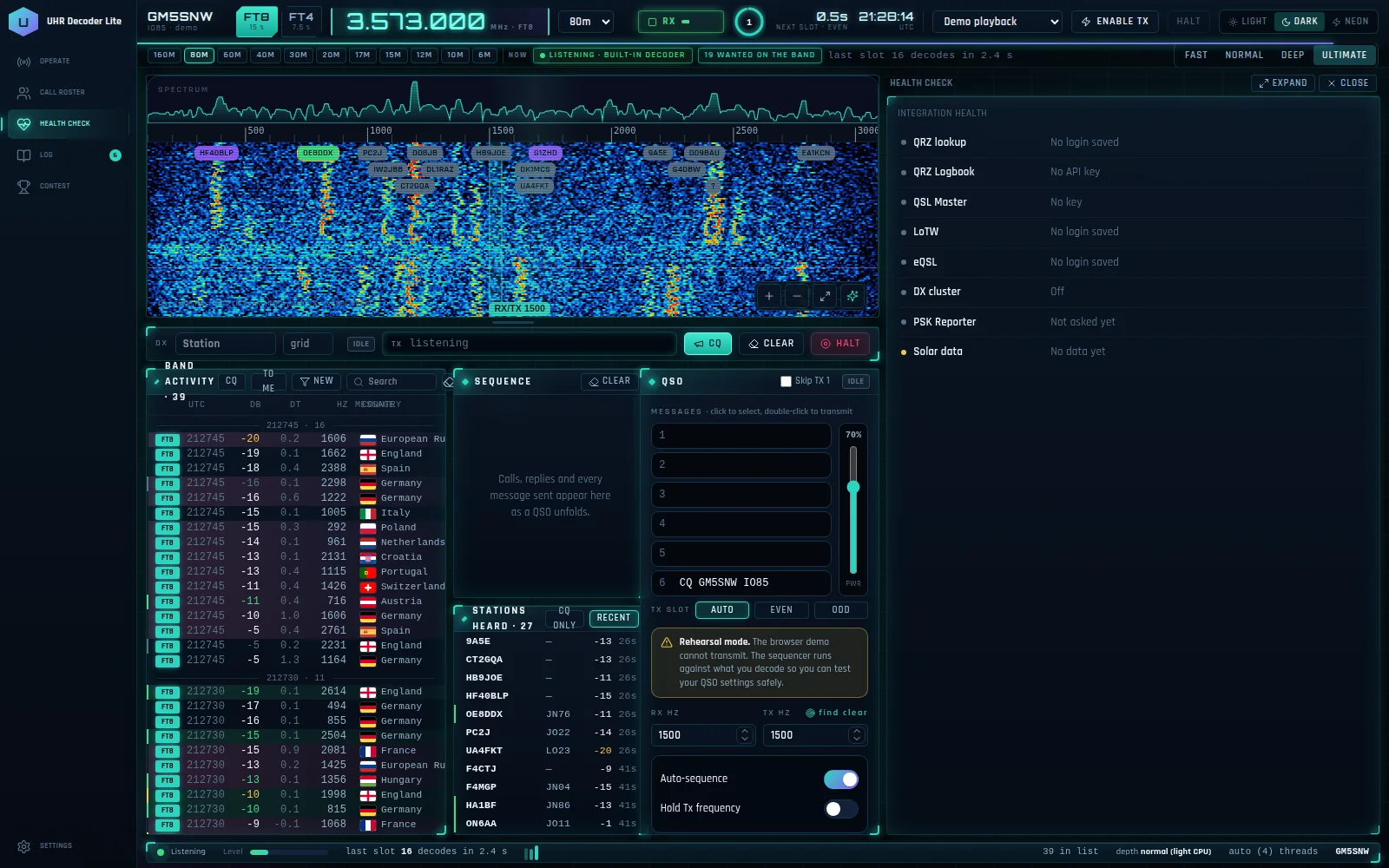
A health check for your online services
See at a glance whether QRZ, QSL Master, LoTW, eQSL, the DX cluster and solar data are connected.
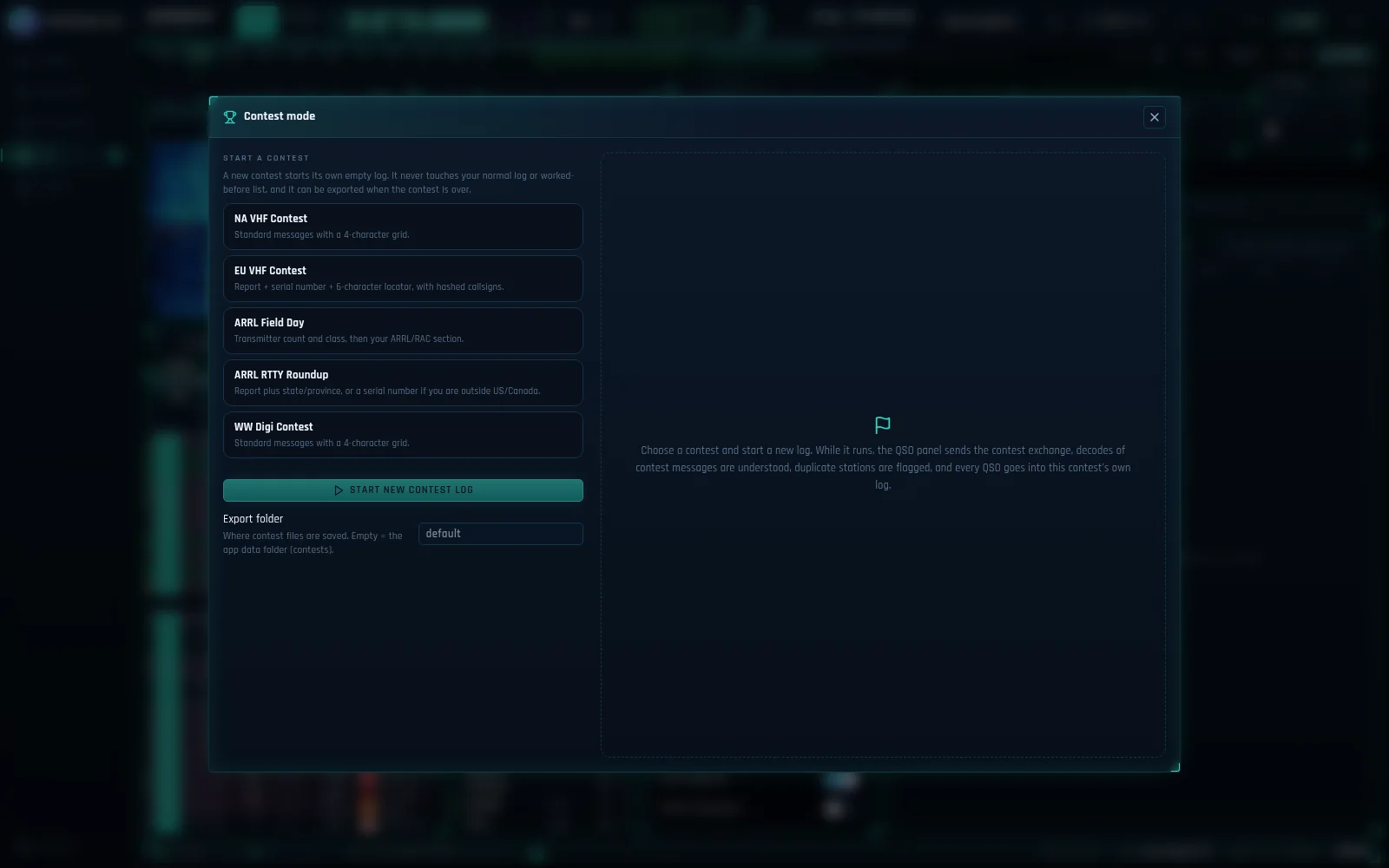
Contest mode with its own log
Start a contest and get a separate, empty log with the exchange sent for you and duplicates flagged. Export it when the contest is over.
Rig control and settings
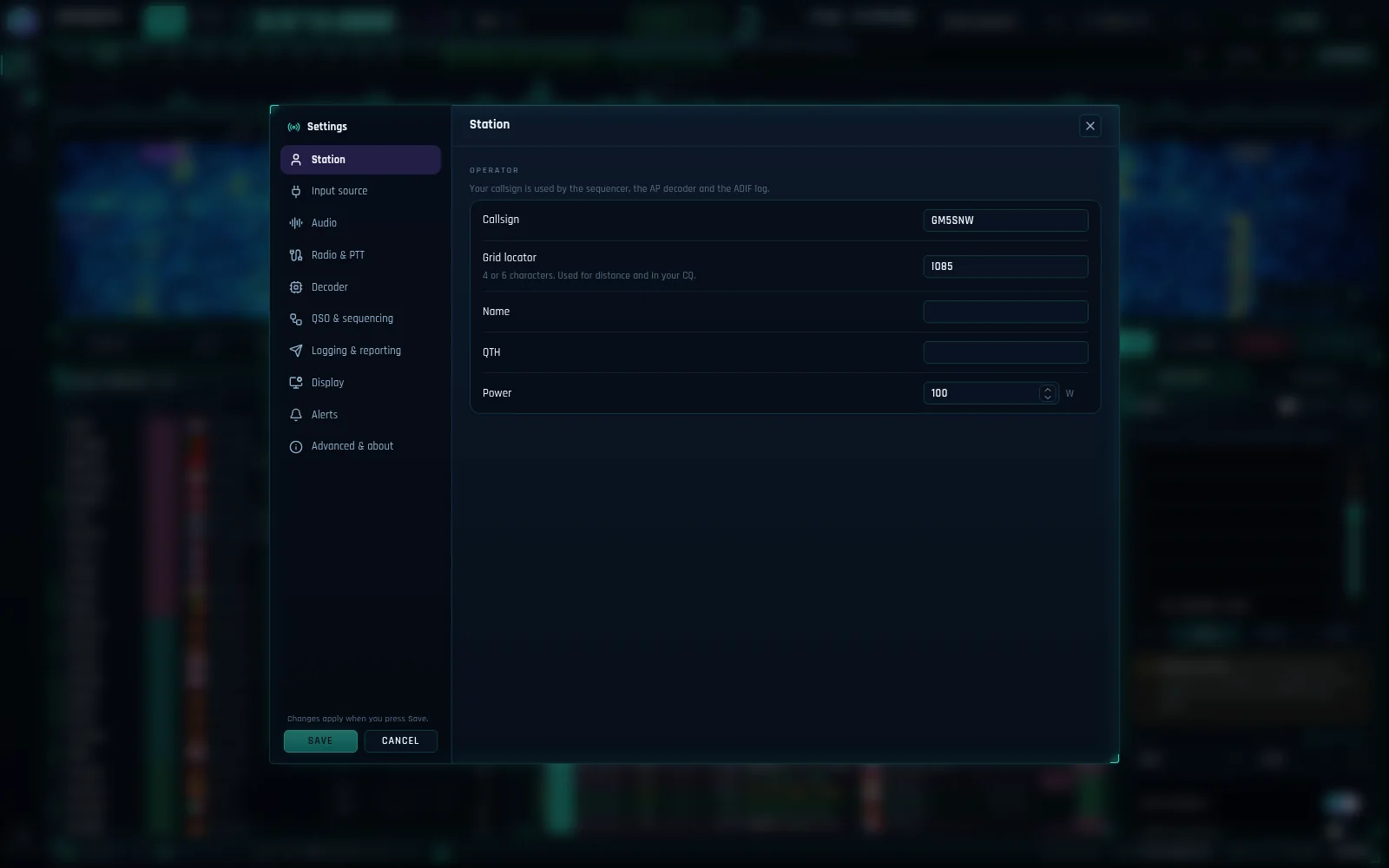
OmniRig, Hamlib rigctld or VOX, the same settings as the full suite, in the same tidy layout.
Light on your PC
With no maps, awards or spots to draw, it is the better choice for lower-powered or busy PCs. Pick a decode depth to suit how much CPU you can spare.
A call roster and a log
The call roster flags new DXCC, grids and calls, and contacts are saved to ADIF and can be sent to your QRZ Logbook, with LoTW confirmations read back in.
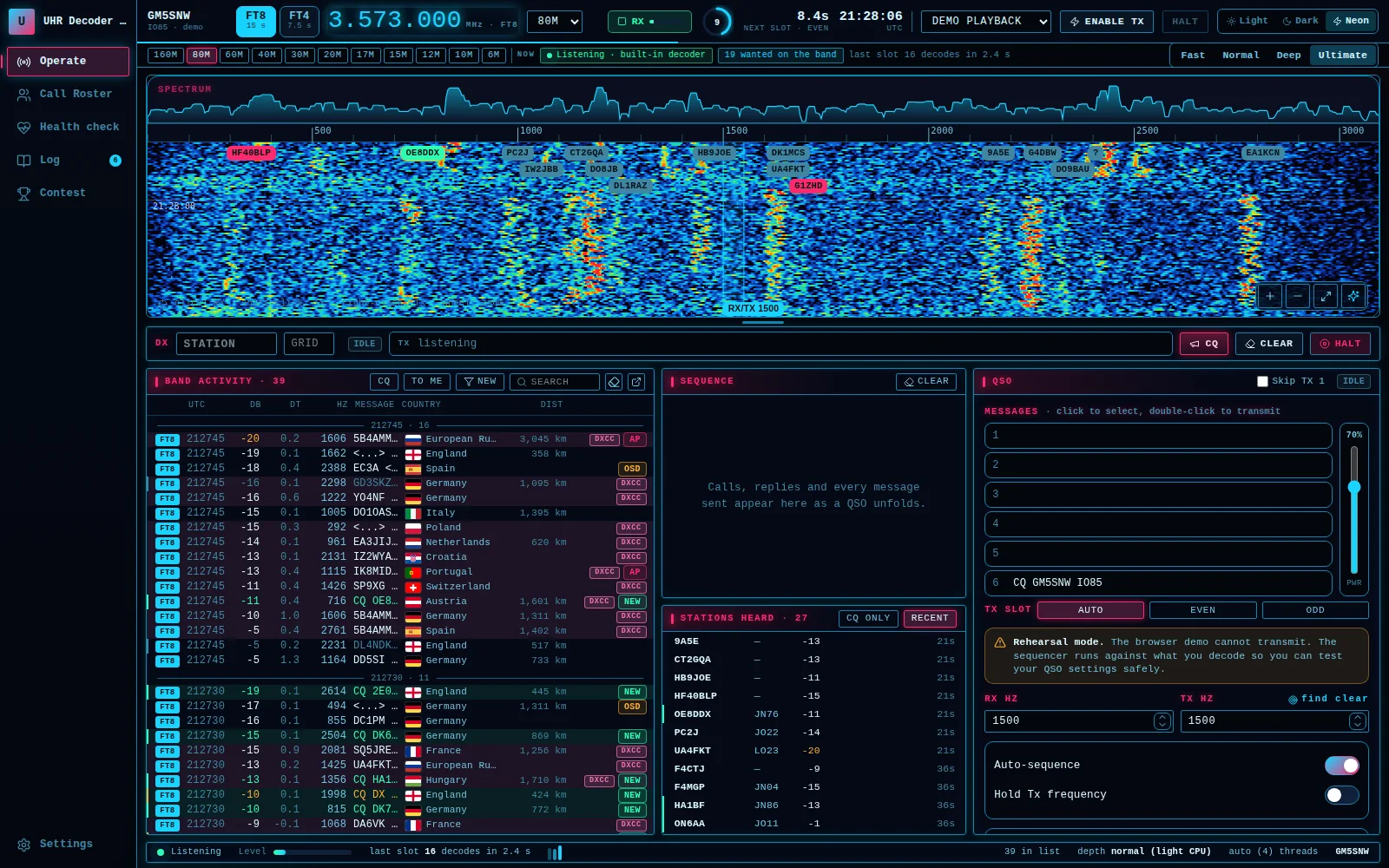
Dark, Light and Neon
The same three themes as UHR Decoder.
Want the maps and awards?
UHR Decoder is the full suite, with the live map, session map, DX spots, POTA, SOTA, propagation and awards tracking added to everything here.
Download UHR Decoder Lite
- Version
- 1.3.10 (test build)
- Released
- 22 November 2026
- File size
- 6.2 MB
- Works on
- Windows 10 or 11
- Price
- Free, donations welcome
What's new
1.3.10: Calling a station now transmits on that station's frequency (Tx = Rx), like JTDX / WSJT-X. Hold Tx frequency, Fixed and Find clear are still honoured, and CQ uses your own pitch.
1.3.10: Each transmission is now planned once, not twice.
Keep the Ultimate suite free
Every Ultimate programme is built and supported in my spare time. If this one helps your operating, a donation covers development and testing.